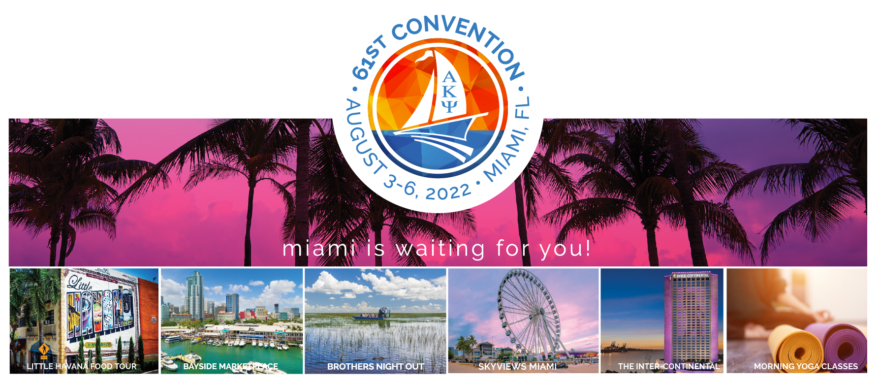
On Monday, April 25th, the 61st Alpha Kappa Psi Convention will only be 100 days away! Individuals from all over the world will gather in Miami, Florida to determine the direction of the Fraternity, participate in leadership development, and celebrate the very best of Alpha Kappa Psi.

The Benefits of Being a Lifelong Learner
Imagine you go to see your doctor about this headache you’ve been having, and he tells you some startling news: “You need brain surgery.”
Your doctor refers you to the best brain surgeon in the country. This guy has an advanced degree, spent seven years in residency and another three years in post-doctoral fellowship training. He’s been board-certified in brain surgery for 20 years and has done hundreds of successful procedures.
You’re understandably nervous (because well, brain surgery), but you’re confident in this surgeon, because with all his education and experience, he must know everything there is to know about brain surgery!
The truth is, even the most experienced, qualified surgeons are always learning. They’re required to complete continuing education credits throughout their entire career just to stay licensed. And with all the advances in technology, they’re constantly being trained on new medical devices and innovations in their field.
The point is, no one is ever done learning — even the most brilliant, accomplished among us. The most successful people are lifelong learners, who know there are always more questions to ask and knowledge to gain. (Also, don’t worry, your brain is probably fine.)

What it Means to Be a Leader in 20 Quotes
As the premier developer of principled business leaders, we talk a lot about leadership at Alpha Kappa Psi. But what does it really mean to be a leader? Can anyone become an effective leader, or are some people just born to lead?

4 Steps to Starting an Employee Resource Group
An Employee Resource Group (ERG) is a voluntary, employee-led group that aligns with a company’s mission and helps foster a safe and supportive working environment and professional development opportunities for specific groups of employees. ERGs are important to the creation of more inclusive workplace cultures.
As Aiko Bethea writes in the Harvard Business Review: “Typically organized around a shared identity, such as race, gender, age, or mental health, they serve as a haven of belonging, offering a space for underrepresented employees to find one another, stave off a sense of isolation, and experience a reprieve from the daily aggressions they’ve endured at work.”
Many companies today have active ERGs, but since they’re employee-led groups, it’s not a given that your company has any, or, that they cater to your specific demographic or interest. If you’d like to be part of a group that doesn’t currently exist in your organization, why not start one!
Here are four steps along with some handy tips from the experts for getting your ERG off the ground.

How to Start a Corporate Social Responsibility Program
More and more companies are beginning to take notice of the importance of social responsibility today, and are realizing how much it matters to both their employees and customers. While many larger companies do offer some form of corporate giving or philanthropy, many organizations still don’t have a formal program in place, and lack any kind of employee-led initiatives.
If your organization doesn’t provide any formal opportunities for volunteering or charitable giving, have you ever thought about taking the initiative to start a program yourself? Some of the best corporate programs were originally started by an employee who wanted to make a difference.